Should I Use Spray Foam Insulation in My House?

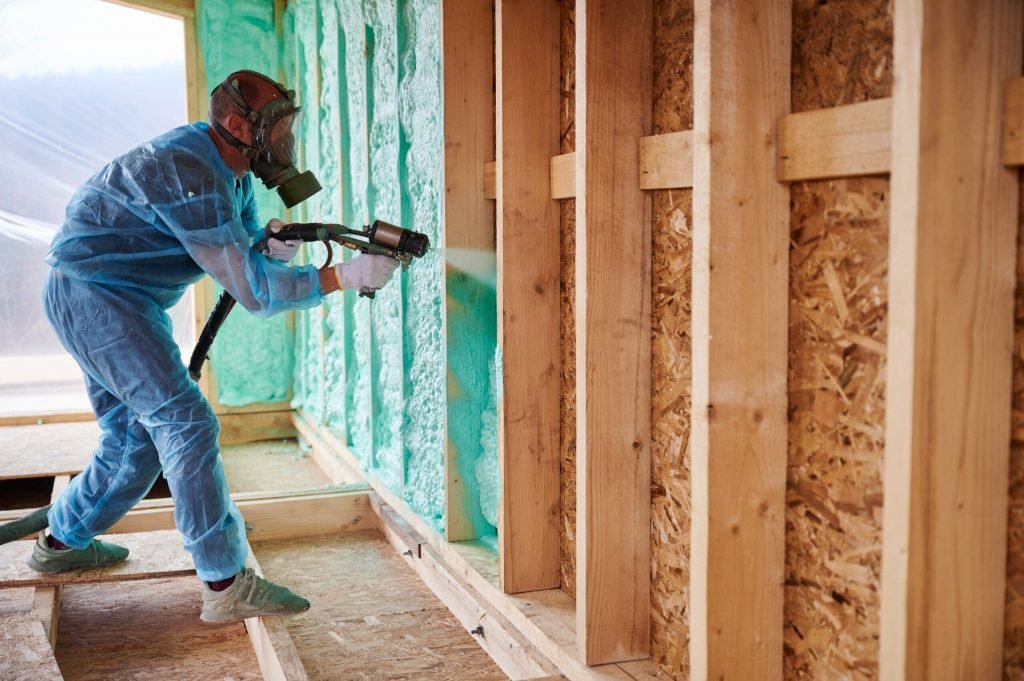
With energy bills being a bone of contention for many households, plenty of homeowners have taken to looking at ways to keep rising costs down and avoid spending more money on utilities than necessary.
One popular way to increase the energy efficiency of the home is to utilise the availability of spray foam insulation. Recent press coverage though has started to indicate that all is not as first thought. Whilst a fantastic way to keep bills under control, lenders are choosing to refuse mortgages on properties with spray foam insulation. This can be especially tricky for those looking for a fast house sale who thought that their home had a great money-saving selling feature.
So why is it that spray foam insulation is proving to be such an obstacle, and how can you sell your home if you have used it or are planning to use it? In this edition of our blog, we find out.
What is spray foam insulation?
Spray foam insulation is seen as an incredible way to increase the energy efficiency of your home. With it expanding to as much as sixty times its liquid volume, it can creep into every gap and prevent those draughts from coming through walls and roofs where they otherwise would be prevalent.
Easy to apply and quick to work, spray foam insulation has won many plaudits. In fact, the government saw it as a worthwhile addition to the Green Homes Grant which helped homeowners pay for energy-efficient home improvements. With the grant now closed, homeowners and property developers are still being encouraged to use it. Now a VAT-free home improvement, people are being quick to insulate with spray foam and boost their energy-saving credentials.
Currently, there are two forms of spray foam insulation suitable for the home. Closed-cell and open-cell.
Closed-cell spray foam sets solid and is very dense. This makes for a great form of insulation as it is extremely hard for the warm air to escape. However, if using it in the roof, it can put stress on the roof supports and lead to condensation to occur. This can then see those same roof supports start to rot.
Open-cell spray foam insulation is a softer alternative and is only to be used by professionals. Due to the way it has made, a thicker layer is often needed to provide optimum insulation.
Why use spray foam insulation?
Spray foam insulation provides a more thorough level of cover as it reaches areas other forms of insulation cannot. This means better coverage, and less expense in the long term.
When compared to other popular insulation types such as glass wool, it is considerably thinner. This allows for a much better level of insulation for much less space. Allowing you to benefit from more storage in lofts.
Despite the Green Home Grant ending, the fact that spray foam insulation is VAT-free provides homeowners with an attractive alternative.
How much will it cost to add spray foam insulation to my home?
Whilst the VAT-free nature of spray foam insulation may be appealing, its overall cost still eclipses that of the more traditional home insulation methods. You can look to pay as much as £50, or more, per square metre, meaning a family home could cost more than £3,000. Glass wool for example may set you back £1,000 or less.
But is spray foam insulation good for my home?
Ultimately yes. It delivers full coverage which allows you to reap the reward of lower energy bills. In addition, it works excellently as a soundproofing material. It can just unfortunately make your home harder to sell.
Will it be harder to sell my house if it has spray foam insulation?
Whilst you may have queues of people showing interest in your home, the addition of spray foam can make it harder to sell.
Spray foam insulation is dense, and whilst that is great for keeping air in, it also traps moisture. This can lead to condensation building up and causing rot to set in. With the insulation covering the structure and being hard to remove, surveyors are unable to check if the structure and the roof are in a suitable condition. This then leads to it being harder for an interested party to secure the mortgage they require.
Why can’t you get a mortgage for a spray foam insulation house?
You may think that with excellent energy efficiency, a home becomes more desirable, and lenders may be more encouraged to supply buyers with the assistance they need. Unfortunately, this is not the case.
As we mentioned above, the way spray foam insulation is applied makes it hard, if not, impossible, for a surveyor to assess the quality of the structure. This can lead to them suggesting that further assessment is needed, the only way this can be done is to remove the insulation altogether. This is not only costly, but time-consuming, and if the structure underneath is found to be faulty or not in good condition, the lender will not lend, and you will be left with an uninsulated roof for nothing.
Should the roof be fine though, a mortgage may well be offered, but with the roof no longer insulated, the potential buyer may look to lower their offer. Some lenders do offer mortgages when you have spray foam insulation. However, you may need to provide specific paperwork, pay additional fees, and have proof of the condition of your roof.
Can I release equity in my home if I have spray foam insulation?
If you decide to stay in your home but want to raise some funds, equity release is often an avenue to consider. Unfortunately, spray foam insulation will hinder your chances. There are currently no equity release providers willing to lend on a property that has had spray foam insulation added after it was built. If the insulation was installed during construction though, there is a possibility you will be able to release equity.
Should I remove spray foam insulation to help secure a sale?
It is best not to. Attempting to remove it yourself will cost lots, potentially even more than it costs to install. In addition to the cost of its removal, you may also have significant structural costs to cover. The nature of the application of the spray foam means that you could cause considerable damage to your structure.
If the spray foam was installed badly, you may also find that rot may have set it and that will certainly require fixing before attempting to sell the home.
What shall I do if I have spray foam insulation and I want to sell my home?
With any type of house sale, you want to make sure the process is as smooth and stress-free as possible. Your first task will be to collate any paperwork relating to the installation of the insulation. This should show when it was installed, what type was used, and any information relating to the property condition before the installation.
You could look at removing it, and whilst we do not advise it, the open-cell type is considerably easier to remove than the closed-cell. This should be given a lot of thought. It may have cost £5,000 to install but it could cost £8,000 to remove. If you have been struggling to sell, could this cash be well spent to ensure the sale goes through?
Alternatively, you could look to a specialist company like Gaffsy. We operate as cash house buyers and guarantee the sale of any property. Our we buy any house approach means that any property, in any condition, in any location can be bought. We do it fast and we do it for free too. With no hidden charges or surprise fees, and a completion in as little as seven days, you can sell your house as is, without concern.